

Every commercial door operator has a lifespan. No matter how well it was built or how carefully it has been maintained, there will come a point when repairs are no longer enough, and replacement becomes the smarter call. The challenge for most business owners is knowing where that line is.
Waiting too long costs you in emergency repair bills and operational downtime. Moving too fast means replacing a system that could have been saved with a targeted repair. This guide helps you make that call clearly and confidently, whether you manage a warehouse, a loading dock, or a commercial facility in Vallejo, CA, while also showing where commercial garage door services fit into the decision.
Understand the Average Lifespan of a Commercial Door Operator
Before you can decide whether to repair or replace, it helps to know what a realistic lifespan looks like for these systems. Not all operators age the same way. Usage, environment, and maintenance history all play a role.
Here is a general lifespan breakdown by use level:
- Light-duty operators: Designed for low-cycle environments, typically up to 25 cycles per day. With proper maintenance, these can last 10 to 15 years or more.
- Standard-duty operators: Built for moderate use, around 25 to 75 cycles per day. Expect a lifespan of 8 to 12 years, depending on conditions.
- Heavy-duty operators: Rated for high-cycle industrial environments with 75 or more cycles per day. These are engineered for longevity, but heavy use and harsh conditions can shorten their effective life to 7 to 10 years without consistent maintenance.
If your operator is approaching or past these thresholds and showing signs of decline, replacement deserves serious consideration. If it is relatively new and well within its expected range, a targeted repair is usually the right move.
To better understand what a healthy system looks like from the ground up, What Is a Commercial Door Operator and How Does It Work? is a helpful starting point.
Warning Signs Your Commercial Door Operator Needs Immediate Attention
Some problems announce themselves clearly. Others develop gradually and are easy to dismiss until they become a full breakdown. Knowing which warning signs to watch for gives you the opportunity to act before an inconvenient issue becomes an expensive emergency.
Watch for these red flags:
- Slow or sluggish movement: The door takes noticeably longer to open or close than it used to. This often points to a struggling motor, worn drive components, or track friction that is putting extra strain on the system.
- Grinding, clicking, or squealing sounds: Unusual sounds during operation are almost always a sign that something is worn, misaligned, or in need of lubrication. Left unaddressed, these sounds typically get worse and lead to component failure.
- Inconsistent response to controls: The door does not respond every time you activate it, or there is a significant delay between the trigger and the door’s movement. This can indicate electrical issues, a failing control panel, or worn receiver components.
- Door reverses without an obstruction: If the door starts closing and then reverses on its own with nothing in its path, the limit switches or safety sensors likely need adjustment or replacement.
- Visible physical damage: Bent tracks, cracked panels, frayed cables, or broken rollers are physical signs that the system has taken damage and needs professional attention right away.
- Motor overheating: If the motor becomes hot to the touch during or after normal operation, it may be undersized for your cycle count or reaching the end of its service life.
If you are seeing one or two of these signs, a repair visit is likely all you need. If several are showing up at once, especially in an older system, replacement may be the more practical path.
Repair First: Situations Where a Fix Makes Sense
Not every problem requires a full replacement. In many cases, a targeted repair by a qualified technician is all it takes to get your system back to full performance. Knowing when a repair is the right call saves you from unnecessary spending.
Repair is typically the right choice when:
- The operator is relatively new: If the system is under five years old and well within its expected duty cycle, most issues are worth repairing rather than replacing the entire unit.
- The problem is isolated: A single failed component, such as a broken limit switch, worn drive gear, or damaged safety sensor, does not mean the whole system needs to go. Replacing one part is almost always more cost-effective than a full replacement.
- The motor is still performing well: If the motor runs quietly and consistently but another component is causing the issue, repair is usually the right approach.
- Maintenance has been consistent: A system with a clean service history tends to respond well to repairs because the surrounding components are in good shape.
- The repair cost is reasonable relative to replacement: As a general rule, if the repair cost is less than 50 percent of what a replacement would cost, repairing is usually the smarter financial decision.
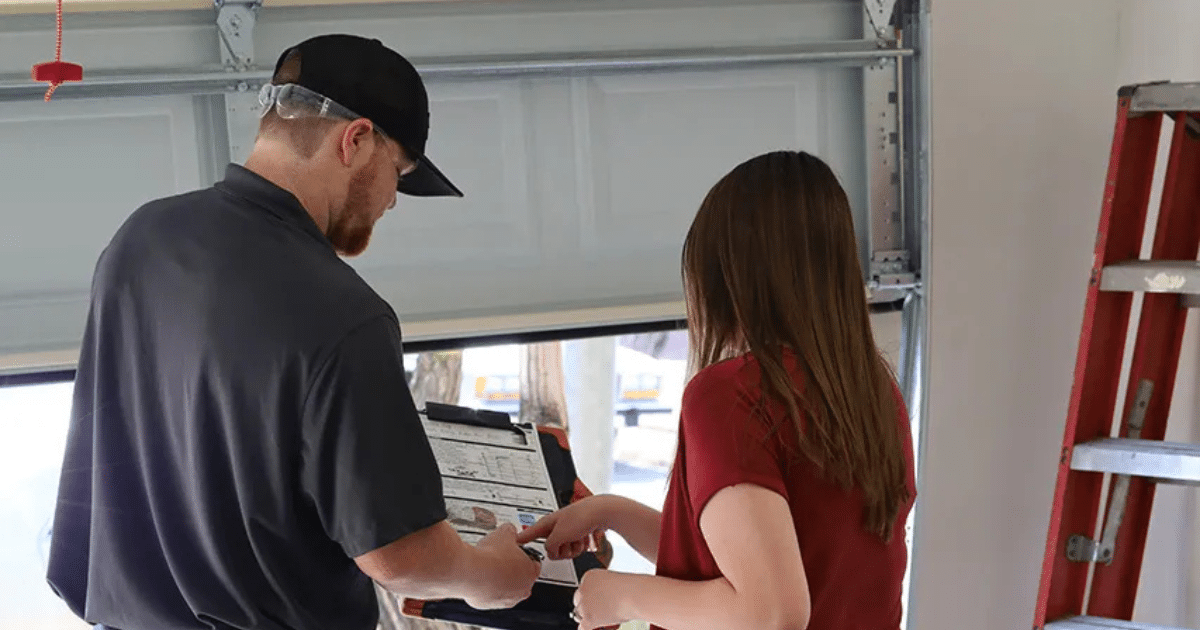
A professional inspection will give you a clear picture of which components are failing and which are still in good condition. That information is what makes the repair versus replacement decision straightforward rather than a guess.
In many cases, issues like sensor misalignment or limit switch problems, commonly covered in guides on repairing a garage door that won’t close, can be resolved without replacing the entire system
Replace Instead: Clear Signs It Is Time for a New Operator
There are situations where continuing to repair an aging system is simply throwing good money after bad. At a certain point, replacement is not just the smarter financial move, it is also the safer one.
Consider replacement when:
- Repairs are becoming frequent: If you are calling for service every few months, the system is telling you something. Recurring failures across multiple components usually signal that the operator as a whole is worn out.
- The operator is no longer code compliant: Older systems may not meet current UL 325 safety standards or ADA accessibility requirements. Operating a non-compliant door system exposes your business to liability, and in some cases, fines.
- Replacement parts are no longer available: Older operators can reach a point where the manufacturer no longer produces the parts needed for repair. When that happens, replacement is the only option.
- The system cannot keep up with your current cycle demands: If your business has grown and your door is now being used far more than it was designed for, an upgrade to a higher duty cycle operator is necessary.
- Energy and operational costs are climbing: An inefficient, aging operator draws more power and causes more downtime than a modern replacement. Over time, those costs add up and make a new system the more economical choice.
- The operator is 10 or more years old with recurring issues: Age alone is not a reason to replace, but combined with performance problems and repair history, it is a strong signal that the system has reached the end of its useful life.
What to Check Before Calling a Technician
Before picking up the phone, there are a few basic checks you or your team can do to help narrow down the issue. These do not replace a professional inspection, but they give the technician useful information and can sometimes reveal a simple fix.
Here is what to check:
- Power supply: Confirm the operator is receiving power. Check the circuit breaker and make sure no breaker has tripped. A power issue is sometimes the simplest explanation for a door that will not respond.
- Remote control batteries: A door that stops responding to a remote is sometimes just a dead battery. Replace the batteries before assuming there is a deeper problem.
- Sensor alignment: Walk the perimeter of the door opening and check that the safety sensors on both sides are properly aligned and free of dirt or debris. Misaligned sensors are a common cause of doors that refuse to close.
- Obstruction in the tracks: Visually inspect the tracks on both sides of the door for debris, buildup, or objects that may be blocking the door’s path.
- Limit switch settings: If the door is stopping short of fully open or fully closed, the limit switches may have shifted and need adjustment. This is a quick fix for a qualified technician.
- Control panel indicator lights: Many modern operators display fault codes or indicator lights on the control panel. Note what you see and share it with the technician when you call.
These checks take only a few minutes and can save time during the service visit. That said, never attempt to adjust springs, cables, or internal motor components on your own. These parts are under significant tension and should only be handled by a trained professional.
The Real Cost of Waiting Too Long
One of the most common mistakes business owners make is delaying action on a door operator that is clearly struggling. The thinking is usually that it is still working, so it can wait. In most cases, that thinking costs more in the long run.
Here is what delayed action typically leads to:
- Emergency repair costs: Unexpected breakdowns almost always happen at the worst possible time, and emergency garage door repair calls usually come with premium rates that are much higher than scheduled service.
- Operational downtime: A door that will not open means vehicles cannot move, deliveries cannot be received, and workflows grind to a halt. In a warehouse or loading dock environment, even a few hours of downtime has a real financial impact.
- Secondary damage: When one component fails under stress, it often takes other parts with it. A motor that burns out can damage the drive system. A broken cable can damage the door panels. Catching problems early almost always means a smaller, less expensive repair.
- Safety incidents: A failing door operator is an unpredictable one. Auto-reverse features may stop working, sensors may lose calibration, and doors may close faster or slower than expected. These conditions put your employees and visitors at risk.
Acting early, even when the issue seems minor, is almost always the right call. And understanding the full value of a well-functioning system can help you make that decision with confidence. Why Your Business Needs a Commercial Door Operator breaks down exactly why these systems are worth protecting.
Preventive Steps That Help You Avoid Premature Replacement
The best way to delay the repair or replacement decision is to take care of your system before problems develop. Preventive maintenance is far less expensive than reactive repairs, and it significantly extends the useful life of your commercial door operator.
Here are the most effective preventive steps:
- Monthly visual inspections: Check the tracks, rollers, cables, springs, and panels for any visible signs of wear, damage, or misalignment. Catching something small early is almost always cheaper than waiting.
- Lubricate moving parts on a regular schedule: Apply a commercial-grade lubricant to rollers, hinges, and springs at least every three to six months. Avoid household sprays, as they attract dirt and can degrade seals over time.
- Test safety features monthly: Manually verify that the auto-reverse function and safety sensors are working correctly. These are life-safety features, and they need to perform reliably every single time.
- Keep the tracks clean: Dirt and debris in the tracks create friction that strains the motor and drive system. A quick wipe-down as part of your routine goes a long way.
- Schedule annual professional inspections: A qualified technician can identify wear patterns, calibration issues, and early signs of component fatigue that are not visible during a routine walkthrough. Annual inspections are one of the most cost-effective investments you can make in your door system.
- Address minor issues immediately: If something sounds different, moves differently, or responds differently, act on it right away. Small problems become big ones quickly in high-cycle environments.

Choosing the Right Replacement Operator for Your Facility
If you have determined that replacement is the right call, the next step is making sure you choose the right operator for your current and future needs. The wrong choice leads right back to the same problems you are trying to solve.
Key factors to consider:
- Duty cycle rating: Match the operator to your actual daily cycle count. If your operation has grown since the original installation, upgrade to a higher-rated unit rather than replacing like for like.
- Door type and weight: The operator must be compatible with your specific door. Sectional doors, roll-up doors, and fire doors each have different requirements, and the operator must be rated for the door’s weight.
- Drive system type: Jackshaft, trolley, and hoist operators each have different installation requirements and performance characteristics. Your ceiling height, available space, and door type will help narrow down the right choice.
- Access control compatibility: If you plan to integrate card readers, keypads, or remote monitoring, confirm that the new operator supports those features before purchasing.
- Safety compliance: Any replacement operator must meet current UL 325 standards. If your facility serves the public, confirm ADA accessibility requirements as well.
- Local permit requirements: In Vallejo, CA, replacing a commercial door operator typically requires a permit from the local building department. Confirm this before work begins to avoid complications.
Taking the time to evaluate these factors before selecting a replacement ensures that your new system is the right fit from day one and keeps you from facing the same decision again too soon.
For a full breakdown of what these systems offer and why the right match matters, What Are the Benefits of a Commercial Door Operator? is worth reviewing before you finalize your decision.
When selecting a replacement, understanding how to choose a garage door can help ensure the operator is properly matched to the door’s material, size, and performance requirements.
Do Not Let a Struggling Door Slow Your Business Down
A commercial door operator that is failing is not just an inconvenience. It is a liability, a safety risk, and a drag on your daily operations. Knowing when to repair, when to replace, and how to maintain your system properly puts you in control of the situation rather than reacting to it.
For businesses in Vallejo, CA, getting the right guidance from a local team makes all the difference. R&S Erection of Vallejo has extensive experience helping commercial clients assess, repair, and replace commercial door operators across a wide range of facility types. If your system is showing signs of wear or you are not sure whether repair or replacement is the right move, contact us today or give us a call. We will help you make the right call for your facility and your budget.
Frequently Asked Questions
What is the most common reason commercial door operators fail prematurely?
The most common cause is using an operator with a duty cycle that is too low for the door’s actual daily use. This puts constant strain on the motor and drive system.
Can I continue using a commercial door operator that is making unusual sounds?
No, unusual sounds often mean something is worn, loose, or misaligned. Using it anyway can lead to bigger damage and higher repair costs.
How long does it typically take to replace a commercial door operator?
Most replacements can be completed in one day by a qualified technician. More complex setups with integrations or permits may take longer.
Is it safe to manually operate a commercial door if the operator fails?
Only if the door has a proper emergency release and can be operated safely according to the manufacturer’s instructions. Large commercial doors can be heavy and hazardous, so a technician should inspect the system as soon as possible.
Does replacing a commercial door operator require a permit in Vallejo, CA?
Yes, in most cases, a permit is required for replacement work. Check with the City of Vallejo before starting the project.
What should I do if my commercial door operator stops working completely during business hours?
Call a commercial door technician right away and only use the manual release if it is safe to do so. Keep people clear of the area and do not attempt internal repairs yourself.
How can I tell if my commercial door operator is no longer code-compliant?
Missing safety sensors, failed auto-reverse functions, or outdated entrapment protection are common warning signs. A professional inspection is the best way to confirm compliance.
Will upgrading to a new commercial door operator improve energy efficiency?
Yes, newer operators often use less power and close more reliably, which helps reduce energy loss. This is especially valuable in climate-controlled facilities.
How often should I schedule professional maintenance to avoid unexpected breakdowns?
At a minimum, schedule service once a year. High-use doors should be inspected every six months.