

A sectional overhead door is one of the most common garage door styles used in homes across the United States. Instead of swinging outward like an old-fashioned single-panel door, it moves straight up. It is built from several horizontal panels connected by hinges, and when you open it, those panels bend and glide along a curved track until the door rests flat against the ceiling inside your garage.
That upward movement is a big reason why people in Vallejo, CA, love this style. Short driveways, tight spaces, and older neighborhood layouts are no problem when the door does not need clearance to swing out. Whether you are replacing an aging door or installing one for the first time, knowing what you are working with helps you make a smarter, more confident decision.
What Makes Up a Sectional Overhead Door
Every sectional door is made up of several components that work together as a system. When one part is off, the whole door feels it. Here is a breakdown of what is inside:
Panels
- Most doors have four to six horizontal panels, depending on the height of the garage opening
- Panels are the visible face of the door from the outside
- They come in a range of materials, including steel, aluminum, wood, and fiberglass
- Steel panels are the most popular because they are durable and low-maintenance
- Aluminum panels are lightweight and resist rust, which makes them a solid fit for homes near the Bay
- Wood panels offer a natural, classic look, but require more upkeep to prevent warping
- Fiberglass and composite panels mimic the look of wood without the heavy maintenance demands
Hinges and Rollers
- Hinges connect each panel to the one above and below it, allowing the sections to bend as the door moves
- Rollers are attached to the sides of the panels and ride inside the track to guide the door
- Worn hinges and rollers are a common source of noise and uneven movement
- A technician will usually inspect these first if the door starts acting up
Track System
- The track is the metal channel on both sides of the door that guides movement from vertical to horizontal
- It curves at the top, where the door transitions from going up to lying flat along the ceiling
- Proper alignment is critical because even a slight bend or gap in the track can throw off the entire operation
Springs
- Springs do the heavy lifting by counterbalancing the weight of the door
- Torsion springs sit horizontally above the door opening and store energy as the door closes
- Extension springs are mounted along the sides of the track and stretch when the door goes down
- Torsion springs are generally considered safer and longer-lasting
- Spring repair and replacement must always be handled by a trained technician due to the high tension involved
Automatic Opener
- Most sectional doors are connected to a motorized opener that operates the door via remote, wall button, or smartphone
- Modern openers include safety sensors near the floor that stop the door from closing if something is in the way
- The opener adds convenience but also an important layer of security for your home
If you are still weighing your options before making a final call, How to Choose the Right Sectional Overhead Door for Your Home breaks down exactly what to look for based on your specific situation.
Types of Sectional Overhead Doors
Not every sectional door looks or performs the same. Knowing your options makes it easier to choose one that fits your home, your budget, and your lifestyle.
Standard Raised Panel
- The most common style found on residential garages
- Features rectangular raised sections that add subtle depth and visual texture
- Available in a wide range of colors and finishes
- Easy to maintain and works with most home styles
Carriage House Style
- Designed to look like vintage barn or carriage house doors
- Often includes decorative hardware such as handles and strap hinges that are cosmetic only
- A popular pick in neighborhoods where curb appeal and character matter
- Pairs well with craftsman and traditional home architecture
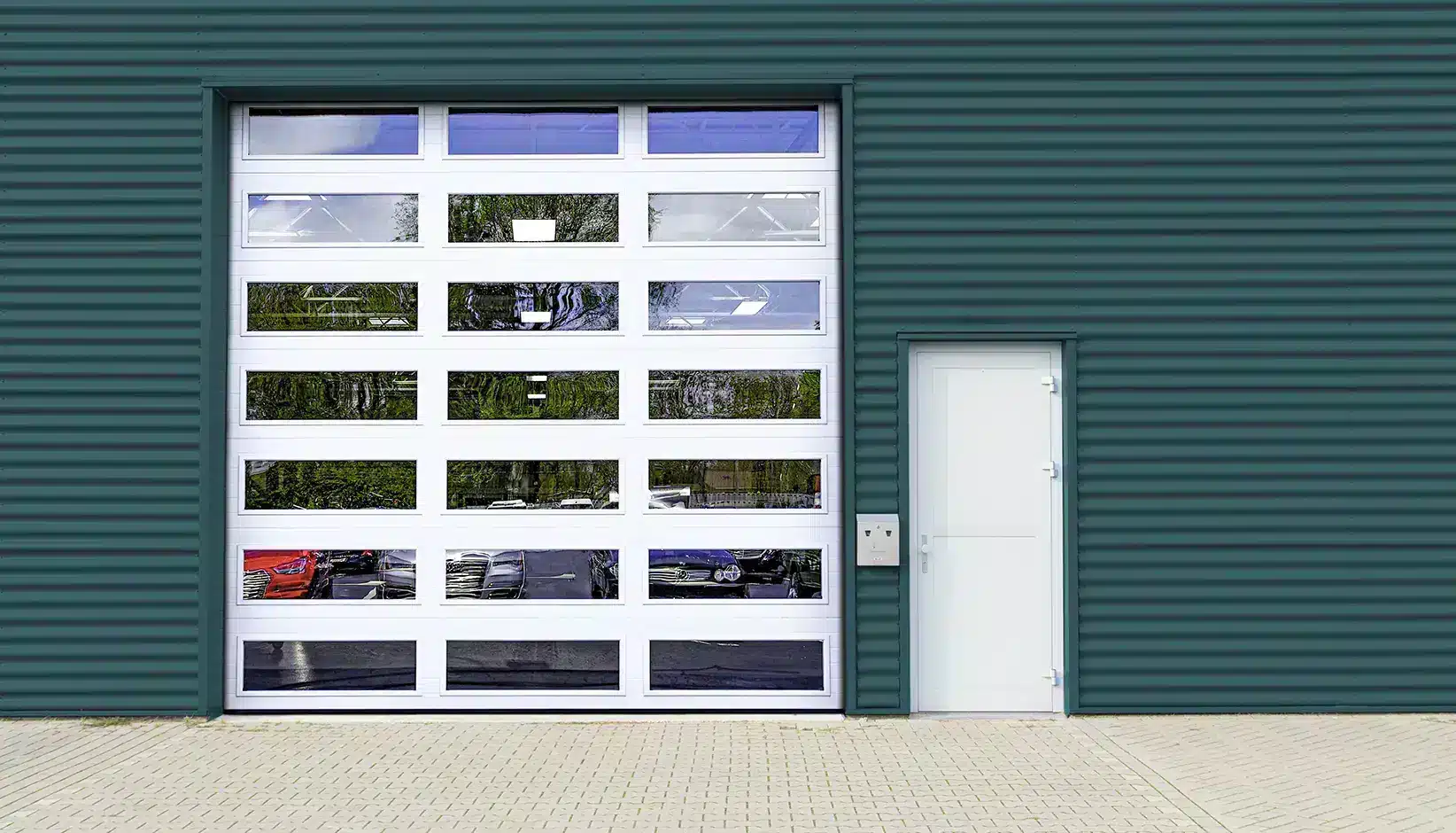
Full-View Glass
- Uses aluminum frames with large glass or acrylic panels instead of solid sections
- Let natural light pour into the garage and create a sleek, modern look
- Commonly seen on contemporary homes and commercial properties
- Glass panels can be clear, frosted, or tinted, depending on your privacy preference
Insulated Sectional Doors
- Built with a foam or polyurethane core sandwiched between two steel layers
- Helps regulate temperature inside the garage, which can lower energy costs in attached garages. Also reduces outside noise
- , which is a bonus if your garage is next to a bedroom or living space
- A smart investment who deal with shifting temperatures throughout the year
Wind-Resistant Doors
- Reinforced with additional internal bracing and heavier gauge materials
- Built to meet specific wind load ratings for added protection during storms
- A practical choice for properties more exposed to strong seasonal winds
For a broader look at door styles and what suits different home architectures, This Old House’s complete guide to garage doors covers the full range of options in detail.
Why Businesses Choose Sectional Doors
Sectional overhead doors have become the preferred choice for many commercial properties because they combine durability, security, efficiency, and ease of operation in one system. From warehouses and loading docks to service centers and industrial facilities, commercial door services often recommend sectional doors for their long-term performance and versatility. Here is why they remain a top choice:
- They open straight up, which means no wasted space in front of the garage
- Insulated versions help keep the garage cooler in summer and warmer in winter
- The multi-panel construction makes them harder to force open compared to single-panel doors
- They are available in dozens of styles, materials, and colors to match almost any home design
- The roller and track system provides smooth, consistent movement when properly maintained
- Automatic openers pair seamlessly with sectional designs for added daily convenience
- Replacement panels can often be swapped out individually if one section gets damaged
The Door and Access Systems Manufacturers Association (DASMA) provides industry-backed guidance on safety standards and door performance that applies to both residential and commercial installations.
Parts That Need Your Attention
Even a well-built sectional door needs regular care to keep it running reliably. Staying on top of a few key areas can save you from a costly repair down the road.
Springs and Cables
- Inspect springs visually for signs of rust, stretching, or cracks
- Look at cables for any fraying or looseness along the sides of the door
- If anything looks off, stop using the door and call a professional right away
- Never attempt to adjust or replace springs or cables on your own. The tension stored in these parts can cause serious injury if mishandled
Rollers and Hinges
- Rollers should spin freely without wobbling or making grinding sounds
- Hinges should be firmly attached with no visible cracks or bending
- Loose or damaged hinges can cause panels to shift out of alignment, which puts extra strain on the full system
- A technician can tighten, lubricate, or replace these parts quickly during a routine visit
Tracks
- Check both tracks for dents, bends, or sections that have pulled away from the wall
- Wipe the inside of the tracks with a damp cloth to clear out dirt and debris
- Avoid spraying lubricant directly into the track as this can attract more buildup over time
Weatherstripping
- The rubber seal along the bottom of the door keeps out rain, wind, and pests
- Check it at least once a year for cracks, tears, or areas that have gone flat
- Replacing weatherstripping is one of the simpler maintenance tasks
Lubrication
- Apply a silicone-based or lithium grease lubricant to rollers, hinges, and springs every six months
- Avoid using WD-40 as a long-term solution. It is a cleaner, not a lasting lubricant for garage door parts
- Proper lubrication reduces wear, cuts down on noise, and extends the life of moving components
Warning Signs You Should Not Ignore
Catching a problem early almost always costs less than waiting until something breaks completely. Watch for these signs that your sectional door may need attention:
- The door moves slowly, jerks, or one side rises faster than the other
- You hear grinding, banging, squealing, or popping sounds during operation
- The door reverses before it finishes closing, which may point to dirty or misaligned sensors
- Panels show visible dents, cracks, or gaps that affect the door’s seal and security
- The door feels unusually heavy when you try to lift it manually, which can signal a spring issue
- The bottom of the door does not sit flush with the ground, leaving gaps that let in drafts or pests
If you are noticing any of the above on a regular basis, it is worth having a technician take a look before things get worse. And if your door has been giving you repeated trouble, 7 Reasons Why a Sectional Overhead Door Is Worth It can help you see whether an upgrade makes more sense than another round of repairs.
What a Professional Installation Looks Like
Installing a sectional overhead door is not a project to take on without experience. It involves heavy panels, precisely tensioned springs, and hardware that has to be mounted exactly right. Here is what the process generally involves when handled by a qualified technician:
- The old door, tracks, and hardware are removed and disposed of safely
- New tracks are mounted on both sides of the opening and anchored properly to the ceiling framing
- Panels are assembled from the bottom up, with rollers and hinges installed at each connection point
- Springs are mounted and tensioned to the correct specification for the door’s size and weight
- If an opener is included, it is wired, mounted, and programmed during the same visit
- The technician runs the door through multiple test cycles and makes adjustments until it operates smoothly and safely
A professional installation typically takes a few hours. Getting it done right the first time matters because improper setup can shorten the life of the door and create safety risks down the road.
Understanding when your current door has reached the end of its useful life is just as important as knowing how to maintain a new one. When to Replace Your Sectional Overhead Door covers the key indicators that it may be time to move on.
Know What to Expect From Your Sectional Overhead Door
A sectional overhead door is not just a functional piece of hardware. It affects your home’s curb appeal, your energy bills, and how secure your property feels every day. When you know how it is built, what it is made of, and what to watch for, you are in a much better position to keep it in good shape and make smart choices when something comes up.
Staying consistent with basic maintenance and responding quickly to warning signs can add years to the life of your door. When it is time for a repair or a full replacement, having a trusted local professional in your corner makes the whole process easier.
If you are in the Vallejo area and need guidance on your sectional overhead door, R&S Erection of Vallejo is ready to help with everything from a quick inspection to a full installation. Their team brings the hands-on experience needed to get the job done safely and correctly. Contact us today or give us a call to schedule your service visit.
Frequently Asked Questions
How many panels does a typical sectional overhead door have?
Most sectional doors have four to six panels. The exact number depends on the height of your garage opening, with taller openings requiring more sections.
Can a sectional overhead door be insulated?
Yes. Many sectional doors come with an insulated core made of polyurethane or polystyrene foam sandwiched between steel layers. Insulated doors help with temperature control and noise reduction.
How long does a sectional overhead door typically last?
A well-maintained sectional door can last 15 to 30 years. Springs tend to need replacement every 7 to 10 years, depending on how often the door is used.
Is it safe to do garage door repairs yourself?
Basic tasks like lubricating hinges or swapping out weatherstripping are generally safe. Spring and cable repairs involve high tension and should always be left to a qualified technician.
What material works best for a sectional door in a coastal or humid climate?
Aluminum with a rust-resistant finish and fiberglass both hold up well in humid or coastal environments. They resist moisture without needing heavy ongoing maintenance.
Do sectional overhead doors require an automatic opener?
No. A sectional door can be operated by hand, but add an opener for the convenience and the added safety features that come with it.
How can I tell if my garage door track is out of alignment?
Uneven movement, grinding noises, or a door that appears to sag on one side are common signs. A technician can inspect and correct the alignment during a standard service visit.
What does weatherstripping do on a sectional overhead door?
It seals the edges of the door to block out wind, rain, debris, and pests. The bottom seal wears out the fastest and should be checked at least once a year.
Are insulated sectional doors worth the extra cost?
For attached garages or homes where the garage shares a wall with a living space, insulated doors can reduce energy loss and lower utility costs over time, making them a worthwhile long-term investment.