
A loading dock without the right safety equipment is not just inefficient. It is a liability waiting to happen. Whether you are managing a single-bay facility in Vallejo, CA or a multi-door distribution center, the equipment at your dock is what stands between a smooth operation and a serious incident.
This guide covers the essential safety equipment every loading dock needs, what each piece of dock equipment does, what to look for when evaluating your current setup, and the warning signs that tell you something needs attention or replacement.
Vehicle Restraints: The Most Critical Safety Device on Any Dock
If there is one piece of equipment that earns the title of most important on a loading dock, it is the vehicle restraint. Nothing else comes close in terms of the severity of incidents it prevents. Just as overhead doors depend on scheduled commercial garage door services to stay functional under heavy use, vehicle restraints depend on consistent inspection and maintenance to perform when it matters most.
What Vehicle Restraints Do and Why They Matter
- They prevent trailer creep, the gradual forward movement a truck can make during loading without the driver realizing it.
- They stop early departure accidents where a driver pulls away before receiving a clear departure signal.
- They hold the trailer stable so dock levelers and forklifts can operate on a secure surface.
- They provide a visible confirmation point that the dock is locked and active before any worker boards.
Types of Vehicle Restraints to Know
- RIG-style restraints hook onto the rear impact guard and are the most common type for standard trailers.
- Wheel chock restraints secure the trailer by blocking the rear wheels and are used when rear guards are incompatible.
- Automatic restraints engage mechanically when a trailer backs in, reducing the chance of a missed engagement.
- Manual restraints require a worker to engage and confirm the lock, which makes training and protocol essential.
Signs Your Vehicle Restraints Need Attention
- The hook or arm shows visible bending, cracking, or corrosion that affects its ability to hold under load.
- The restraint engages but does not hold firmly when tested before the first truck of the day.
- The control panel indicator light fails to confirm engagement even after the restraint is activated.
- The restraint requires repeated attempts to engage or disengage during normal operation.
If you want to know exactly how long your restraints and other dock equipment should last before replacement becomes the smarter call, read When to Inspect and Replace Your Loading Dock Equipment for the specific timelines and warning signs to watch for.
Dock Levelers: Bridging the Gap Safely
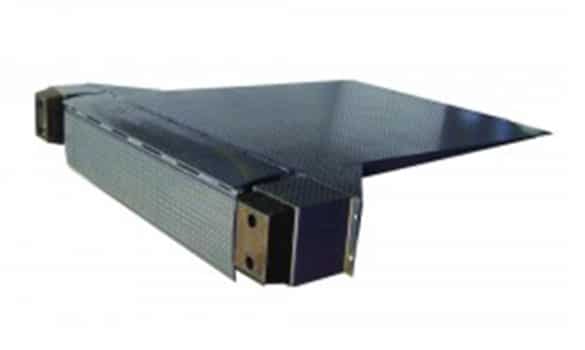
Dock levelers are the bridge between the dock floor and the trailer floor. Without a properly functioning leveler, every load transfer is a fall hazard and an equipment risk.
Mechanical vs. Hydraulic vs. Air-Powered Levelers
- Mechanical levelers use spring tension to position the lip and are durable but require regular spring and hinge checks.
- Hydraulic levelers use fluid pressure for smooth, controlled movement and need regular fluid level and seal inspections.
- Air-powered levelers use pneumatic systems for positioning and require checks on air bags and pressure components.
- Vertical storing levelers keep the dock sealed when not in use and are ideal for temperature-controlled environments.
What a Properly Functioning Leveler Looks Like
- The leveler positions smoothly and holds its angle consistently without drifting or dropping during use.
- The lip extends fully and rests flat against the trailer floor without gaps or uneven contact.
- There are no grinding, popping, or hydraulic sounds during operation that were not present before.
- The leveler returns to its fully stored position cleanly after each use without manual intervention.
Leveler Warning Signs That Cannot Be Ignored
- Hydraulic fluid visible on the pit floor or on the leveler frame indicates an internal seal failure.
- The leveler drops unexpectedly during use, even slightly, which creates an immediate fall and equipment hazard.
- The lip fails to extend fully or hangs at an angle that creates an uneven surface for forklifts.
- The leveler requires more than one attempt to reach its correct operating position.
Staying on top of these warning signs is only half the job, so read How to Keep Loading Dock Equipment Operating Safely to learn the daily and weekly habits that catch problems before they escalate.
Dock Seals and Shelters: Protecting the Opening
Dock seals and shelters are often treated as weatherproofing accessories rather than safety equipment. In practice, they do both, and a damaged seal creates problems that go beyond temperature control.
Dock Seals vs. Dock Shelters: Understanding the Difference
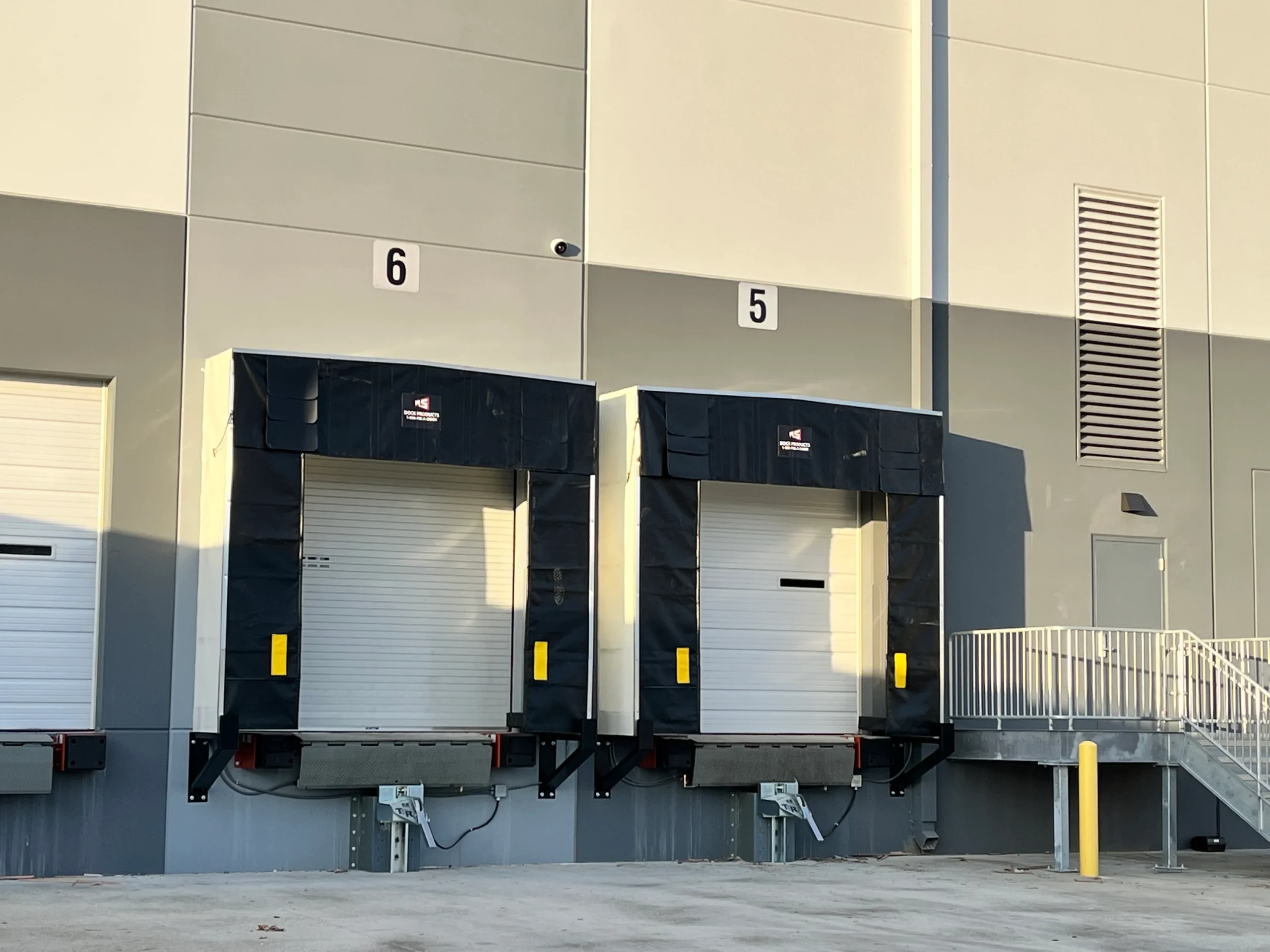
- Dock seals compress against the sides and top of the trailer, creating a tight barrier that limits air exchange.
- Dock shelters frame the trailer opening without full compression, accommodating more trailer size variation.
- Combination systems use a shelter frame with foam pads at contact points for a balance of fit and flexibility.
- Inflatable seals use air pressure to conform to trailer contours and are effective for high-variation trailer fleets.
How Damaged Seals Create Safety and Operational Problems
- Gaps at the trailer opening allow moisture to enter the dock area, increasing slip risk on dock floors.
- Exposed openings let in wind, pests, and temperature extremes that affect the working environment.
- A seal that no longer contacts the trailer properly allows forklift exhaust to recirculate into the dock space.
- Missing header padding exposes workers to contact with the top edge of the trailer during loading.
What to Check on Dock Seals and Shelters
- Inspect foam pads and fabric facing for tears, compression damage, or detachment from the mounting frame.
- Check header curtains for holes, fraying edges, or visible light coming through when the dock is sealed.
- Confirm that side pads make consistent contact with the trailer sides without over-compressing or pulling away.
- Review mounting hardware for loose fasteners or frame damage that affects how the seal holds its position.
Overhead Dock Doors: Heavy, Fast, and High-Risk When Neglected
Overhead doors at loading docks operate in one of the harshest environments any door will face. High cycle counts, forklift exhaust, temperature shifts, and constant traffic all accelerate wear.
High-Cycle Door Features Every Dock Should Have
- High-cycle springs rated for 100,000 or more cycles significantly outlast standard springs in high-traffic dock environments.
- Heavy-gauge tracks and reinforced brackets handle the lateral stress that forklifts and dock traffic create.
- Auto-reverse and safety edge sensors stop and reverse the door if contact with an object or person is detected.
- Vision panels allow workers to see through the door before opening, reducing blind-zone collision risk.
Common Overhead Door Problems at Loading Docks
- Springs that are worn, cracked, or have exceeded their cycle rating are a sudden-failure risk.
- Cables that are fraying or have jumped off their drum allow the door to fall unevenly or drop without warning.
- Tracks that are bent or misaligned cause the door to bind, which puts stress on every other component.
- Rollers that are worn flat instead of round create vibration and door movement that accelerates track wear.
Knowing the specific types of dock door systems available helps safety managers match the right equipment to their facility’s needs. This overview of types of door systems covers the key differences worth understanding before making equipment decisions.
When to Call a Technician for Your Overhead Door
- Any broken or visibly damaged torsion spring must be handled by a qualified technician. Springs store significant tension and are dangerous without proper training and tools.
- A door that has come off its tracks should not be forced back into place manually, as this risks further damage and injury.
- Fraying or snapped cables require immediate service because a door with a failed cable can drop suddenly.
- Any door that fails the auto-reverse test should be taken out of service until the safety mechanism is repaired and confirmed functional.
If you want to understand what the rules require and what the real cost of non-compliance looks like, read Why Loading Dock Safety Rules Are Non-Negotiable to see why these callouts cannot wait.
Dock Bumpers: The Low-Cost Protection Most Facilities Underestimate
Dock bumpers rarely get attention until they are damaged or missing. For how little they cost and how much they protect, they deserve more consistent maintenance than most facilities give them.
What Dock Bumpers Actually Protect
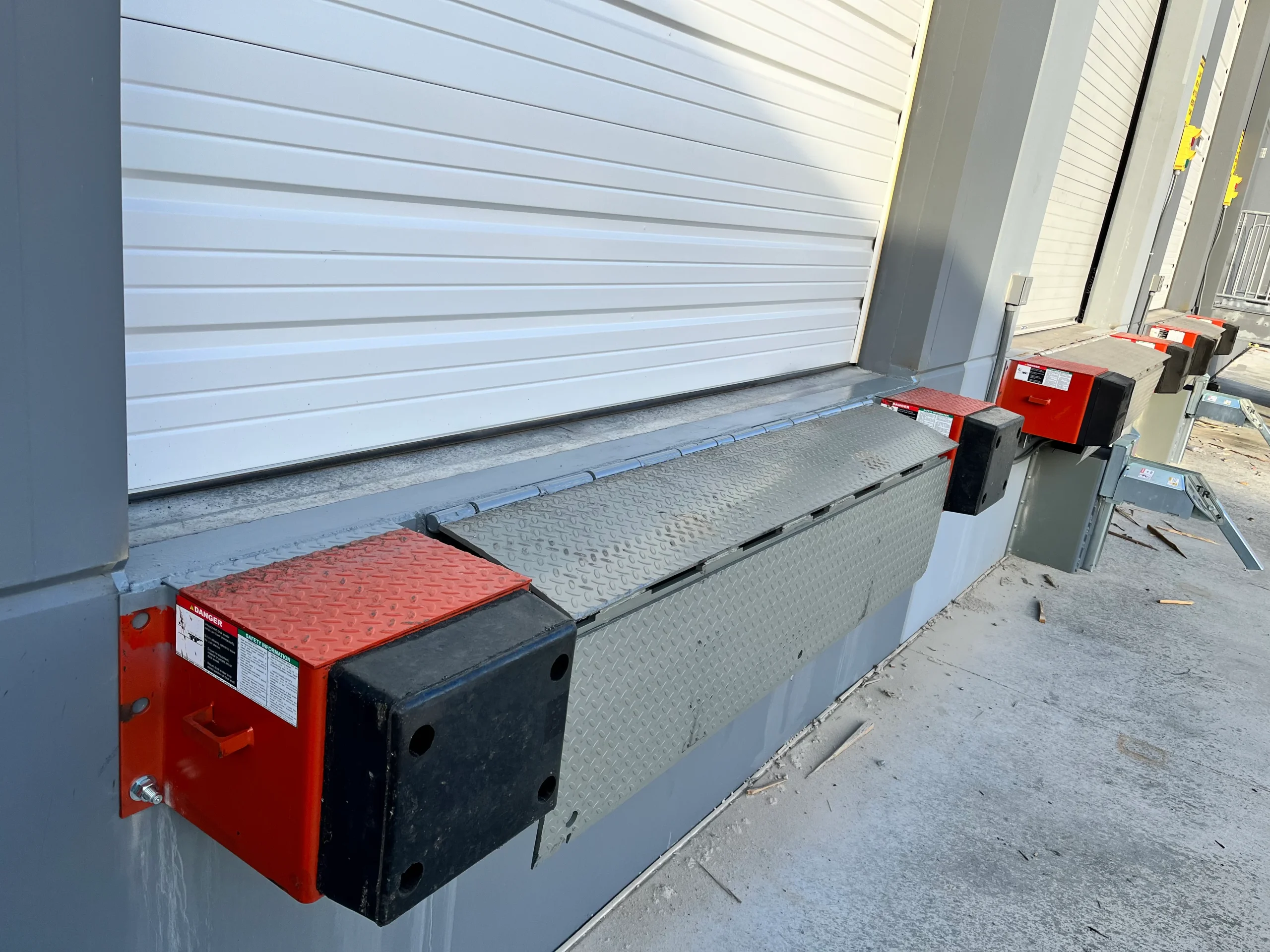
- They protect the dock face from impact damage that would require costly structural repairs over time.
- They protect the trailer from damage that creates liability between the facility and the carrier.
- They set the correct standoff distance that allows dock seals to make proper contact with the trailer.
- They reduce the energy transferred to the dock leveler during trailer contact, extending leveler service life.
Bumper Types and What They Are Best For
- Laminated dock bumpers use compressed rubber layers and are the most common type for standard dock applications.
- Molded bumpers are a single piece of rubber compound and resist splitting better in high-impact environments.
- Steel-faced bumpers add a protective plate over the rubber face and are used where abrasion from trailer contact is high.
- Projection bumpers extend further from the dock face and are used where trailer overhang requires more standoff distance.
Signs Your Dock Bumpers Need Replacement
- The bumper has compressed to less than half its original depth, meaning it is no longer absorbing impact effectively.
- Laminated bumpers show separation between layers, which reduces their structural integrity under load.
- The mounting hardware is loose, missing, or shows corrosion that could allow the bumper to shift during contact.
- The dock face behind the bumper shows fresh impact marks, indicating the bumper is no longer providing adequate protection.
Safety Lights and Communication Systems: Often Overlooked, Always Essential
The equipment covered so far protects against mechanical failure. Safety lights and communication systems protect against the human side of dock incidents, the miscommunications and missed signals that lead to trailer separation and collision.
Dock Communication Light Systems
- Red light signals that the dock is active and no truck movement is permitted, regardless of how long loading is taking.
- A green light signals that the dock is clear and the driver has permission to pull away from the bay.
- Systems should be visible from both inside the dock and from the driver’s cab to eliminate blind-spot uncertainty.
- Lights must be tested at the start of each shift. A broken light system creates false confidence, which is more dangerous than no system.
Interior Dock Lighting Requirements
- OSHA requires a minimum of 5 foot-candles of lighting in dock loading areas to maintain safe working conditions.
- Trailer interiors are often dark, and portable dock lights or trailer-mounted lighting prevent workers from operating blind.
- Motion-activated lighting in dock staging areas reduces the chance of slip and trip incidents during off-peak hours.
- Emergency lighting must be tested regularly to confirm it activates and provides adequate coverage during a power failure.
Driver Check-In and Communication Protocols
- Written dock procedures given to drivers at check-in establish expectations before the truck ever backs in.
- A two-way confirmation step, where the driver acknowledges the all-clear signal before pulling away, removes departure ambiguity.
- Language-accessible signage at dock bays reinforces key safety steps for drivers who may not speak the primary language of dock staff.
- Visitor and carrier logs that include dock safety acknowledgment create both accountability and documentation of safety briefings.
If you want a broader perspective on evaluating and choosing the right door setup for your facility, this guide on how to choose the right door covers the key factors worth considering before making any equipment decisions.
Your Dock Equipment List Is Only as Good as Its Maintenance
Having the right safety equipment on your loading dock is the starting point. Keeping it in working order is what actually protects your team. A vehicle restraint that is not tested, a leveler that has not been lubricated, or a dock light that nobody checked last week are not safety equipment. They are false security.
If your facility in Vallejo, CA needs a professional assessment of its current dock equipment or guidance on what should be added or replaced, R&S Erection of Vallejo has the experience to help you get there. Contact us today or give us a call to schedule an inspection and make sure every piece of equipment on your dock is doing the job it was built to do.
Frequently Asked Questions
How do I know if my dock leveler is the right size for my operation?
Dock levelers are rated by width and weight capacity. The leveler must be wide enough to span the dock opening and rated for the heaviest loaded forklift that will use it. A technician can confirm whether your current leveler meets those requirements.
Can dock seals be repaired or do they always need full replacement?
Minor tears in dock seal fabric can sometimes be patched, but foam pads that have fully compressed or header curtains with significant damage typically require replacement to restore their function.
How often should dock bumpers be replaced?
Bumper replacement frequency depends on traffic volume and impact severity. Facilities with high trailer volume should inspect bumpers quarterly and replace them when compression depth drops below half the original thickness.
What type of vehicle restraint works best for facilities with mixed trailer types?
Facilities handling a mix of trailer types often benefit from automatic restraints with adjustable hooks that accommodate varying rear impact guard heights. A technician can recommend the right model based on your specific trailer fleet.
Are dock safety lights required by OSHA?
OSHA does not mandate a specific dock light system, but facilities are required to maintain adequate communication systems to prevent trailer separation incidents. Dock light systems are the industry-standard method for meeting this requirement.
What is the weight capacity range for standard dock levelers?
Standard dock levelers are typically rated between 25,000 and 80,000 pounds, with heavy-duty models going higher. The correct rating depends on the weight of the forklifts and loads that will use the leveler.
How does Vallejo's coastal climate affect loading dock equipment?
Coastal humidity accelerates rust on metal components including springs, cables, tracks, and restraint hardware. Facilities in the Vallejo area benefit from more frequent lubrication schedules and rust-inhibiting treatments compared to facilities in drier inland locations.
Can I add safety equipment to an existing dock without a full renovation?
Yes. Vehicle restraints, dock lights, bumpers, and seals can typically be installed or upgraded without major structural changes. A professional assessment will confirm what your existing dock can accommodate.
How do I know when dock equipment has reached the end of its service life?
Recurring repairs, visible structural wear, repeated calibration failures, and equipment that no longer meets the load or cycle demands of your operation are all indicators that replacement rather than continued repair is the right decision.