

Nylon rollers often outlast steel rollers in everyday residential use, mainly because their sealed bearings tend to resist dust and moisture better and wear the track less aggressively. Steel still earns its place on high-cycle commercial doors, older tracks built around a heavier wheel, or situations where upfront cost or load capacity matters more than noise. The right answer depends on how often the door runs, how the garage is used, how much noise you’re willing to live with, and your budget, and picking a material that doesn’t match the application is one of the more common reasons homeowners end up facing an early garage door roller repair.
The six differences below cover material and build, noise level, lifespan, cost over time, best-fit use cases, and weather tolerance, so you can match the roller to your specific door and usage pattern instead of just picking whichever option happens to be cheaper on the shelf that day.
Key Takeaways
- Nylon rollers are often estimated to last around 7 to 10+ years, and steel around 3 to 5 years under similar use, though actual lifespan depends on the bearings, door weight, usage, environment, and maintenance.
- Steel costs less upfront but tends to wear the track faster over time.
- Nylon generally runs quieter thanks to its softer, vibration-absorbing material.
- Steel tends to handle higher heat and heavier commercial-cycle doors better than standard nylon.
- Sealed ball-bearing versions of either material tend to outperform open-bearing versions.
- Mixing roller types on the same door isn’t generally recommended, since it can create uneven wear across the track. Choosing one material consistently can make your next garage door roller replacement simpler since you won’t need to match mismatched parts.
- The better material overall depends on the specific door, usage pattern, budget, and priorities, rather than one type being the right call in every situation.
Nylon vs. Steel at a Glance
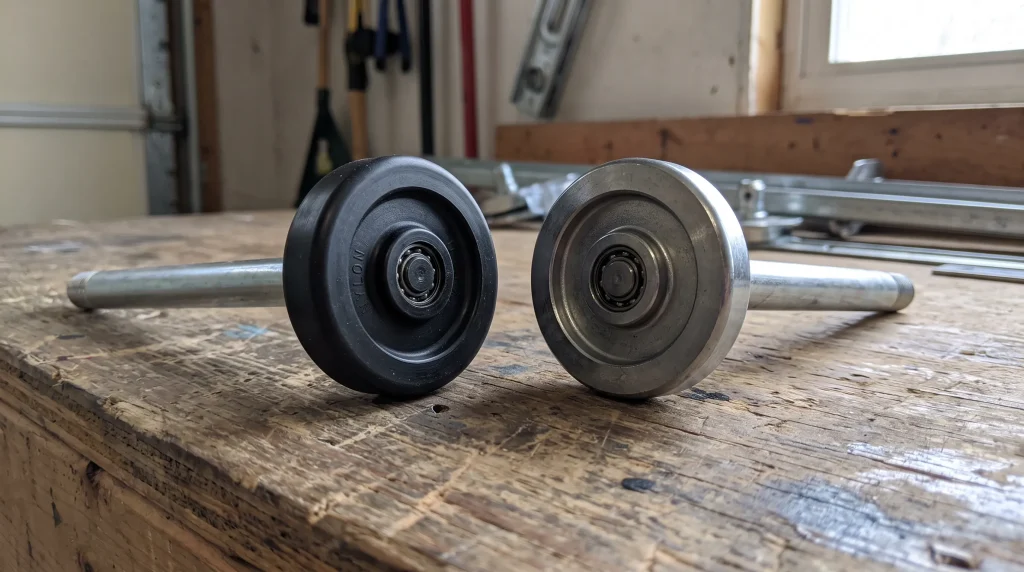
| Factor | Nylon Rollers | Steel Rollers |
| Estimated lifespan (residential use) | 7-10+ years | 3-5 years |
| Noise level | Quiet | Noticeably louder |
| Upfront cost | Moderate | Lower |
| Track wear over time | Minimal | Faster |
| Best suited for | Standard residential doors | High-cycle commercial or heavy older doors |
| Heat tolerance | Good, can soften in extreme heat | Excellent |
These figures are general estimates. Actual lifespan and performance depend on the specific rollers, bearings, door weight, usage, environment, and maintenance.
Material and Build
Nylon rollers use a hard plastic wheel, usually with a steel ball-bearing core sealed inside, so the wheel itself never makes metal-on-metal contact with the track. Steel rollers are solid or hollow metal wheels that ride directly on the steel track, and the bearing inside can be either sealed or left open to the elements, depending on the grade.
- Nylon: plastic wheel, sealed steel bearing core, quieter contact with the track.
- Steel: metal wheel, open or sealed bearing, direct metal-on-metal contact.
Sealed bearings, in either material, tend to keep out dust and moisture far better than open bearings, which is often a bigger factor in lifespan than the wheel material itself.
How Roller Material Affects Garage Door Track Wear
Because nylon doesn’t grind against the steel track the way a steel roller does, tracks paired with nylon tend to show noticeably less wear over the same number of cycles. This is a common reason professional installers reach for nylon on standard residential doors, though steel remains a reasonable choice where load capacity or upfront cost is the priority.
Noise Level
This is usually the difference homeowners notice first. Nylon’s plastic surface absorbs vibration before it transfers into the track, while steel transmits more of it directly, which is one reason steel-roller doors tend to sound louder even when properly lubricated and aligned.
Why Nylon Rollers Run Quieter Than Steel
If your main complaint is sound rather than durability or cost, switching from steel to nylon is often an effective upgrade, sometimes noticeable within the first few uses.
If you’re troubleshooting a specific squeal, grind, or pop rather than general background noise, our guide on Why Are Garage Door Rollers So Noisy? 5 Causes and Fixes breaks down each sound and what it may mean before you decide on a material switch.
Lifespan Under Normal Use
For a typical residential door opening 3 to 5 times a day, nylon rollers are often estimated to hold up for around 7 to 10 years or more before replacement. Steel rollers under similar conditions are often estimated to need replacement somewhat sooner, roughly every 3 to 5 years, since metal-on-metal contact tends to accelerate bearing wear. These are general estimates rather than guarantees, and actual results vary based on the specific rollers, bearings, door weight, usage, environment, and maintenance.
- Nylon: often fewer replacement cycles and less frequent service visits over the life of the door, in typical residential use.
- Steel: often a shorter individual lifespan, but a lower cost per replacement if budget matters more than frequency.
Both materials tend to last longer with routine lubrication, though nylon’s sealed bearing can make it more forgiving if that maintenance gets skipped occasionally.
How Daily Use Affects Roller Lifespan
Doors that open more than five times a day, common with attached garages used as a main entrance, will generally wear either material faster than average, which is worth factoring in when comparing the estimates above. A busy household with two commuters and frequent deliveries can easily double the average cycle count of a typical single-car garage.
Cost Over Time
Steel rollers are cheaper per unit, which makes them attractive upfront. But because they tend to wear out faster and put more strain on the track, the total cost over 10 years often evens out or tips in nylon’s favor once you factor in more frequent replacement visits, though this depends on how the specific door is used.
Comparing Long-Term Roller Replacement Costs
Think of it less as cheap versus expensive and more as paying a little more now or paying in smaller amounts more often. Neither choice is wrong; it depends on budget preference, priorities, and how long you plan to stay in the home. Homeowners planning a longer stay sometimes lean toward the lower total cost of ownership that nylon can offer, while short-term owners or those prioritizing upfront cost sometimes prefer steel.
If you’re planning to make this swap yourself rather than hiring it out, our guide on Can You Replace Garage Door Rollers Yourself? 4 Risks to Know First covers exactly which rollers are safe to replace on your own and which ones call for a professional.
Best Use Cases
Nylon is often a good fit for standard residential garage doors, especially in quieter neighborhoods or attached garages near bedrooms. Steel still earns its place on heavier commercial-grade doors, high-cycle openings, or older tracks originally built around a heavier steel wheel, or wherever upfront cost and load capacity outweigh noise as a priority.
- Nylon: standard residential doors, noise-sensitive homes, doors opening a handful of times daily.
- Steel: commercial-grade doors, businesses with dozens of daily cycles, older tracks not designed for lighter nylon wheels, or budget-conscious upfront replacements.
- Mixed-use garages, like a home workshop with frequent daily traffic, sometimes fall in between and are worth a quick inspection before assuming either default applies.
Which Roller Type Fits Your Door’s Weight and Frequency
Match roller material to door weight, cycle frequency, and budget rather than price alone. Per the International Door Association’s care and maintenance guidance, an undersized roller for a heavy door can wear out well before its expected lifespan, regardless of material.
If you’re not sure whether it’s time to replace at all, regardless of which material you land on, our complete guide on How Often Should You Replace Garage Door Rollers? 7 Signs It’s Time covers both the age-based schedule and the physical warning signs to watch for.
Heat and Weather Tolerance
Steel tends to handle direct heat and extreme temperature swings somewhat better than standard nylon, which can soften marginally in very high heat over many years. In most Vallejo-area garages this difference is minor, but it’s worth noting for uninsulated garages with significant summer heat buildup.
- Nylon: performs well in typical residential conditions, with a minor softening risk only in extreme, sustained heat.
- Steel: better suited to consistently high-heat environments, but more prone to rust in humid or coastal air.
Roller standards more broadly are shaped by industry-wide safety and performance guidelines. See ULSE’s overview of why automatic garage door standards matter for context on how components like rollers are tested and rated before they reach the shelf.
Does Vallejo’s Climate Favor One Roller Material Over the Other?
Vallejo’s marine-influenced climate leans mild rather than extreme, so heat tolerance rarely tips the decision here. Coastal humidity and occasional salt air make nylon’s rust resistance a relevant factor for many homes in the area, though steel’s slight edge in raw heat tolerance may matter more for specific applications like an uninsulated, south-facing garage.
The Right Roller Comes Down to How You Use the Door
There isn’t one roller material that’s the right call for every door. Nylon tends to work well for homeowners prioritizing quiet operation and lower long-term track wear, and it’s often good for a decade or more before replacement under typical residential use. Steel still makes sense on heavier or high-cycle doors, or wherever upfront cost or load capacity outweighs noise as the priority. If you’re not sure which is already installed, it’s worth a quick check before assuming either way.
R&S Erection of Vallejo can take a look at your current rollers and walk you through which material makes sense for your specific door and how you use it. Contact us today or give us a call to talk through pricing and stop guessing at what’s already installed.
Frequently Asked Questions
Are nylon rollers strong enough for a heavy insulated garage door?
Yes, quality nylon rollers with sealed ball bearings are rated for standard residential doors, including insulated ones. Steel becomes more relevant on unusually heavy commercial doors, not typical home installs.
Why do some older homes still have steel rollers?
Steel was the standard for decades before sealed nylon bearings became widely available and affordable. Many Vallejo homes built years ago still have their original steel rollers simply because they haven't needed replacing yet, and there's no urgency to swap them out early if they're still running smoothly and quietly.
Do nylon rollers need lubrication like steel ones?
Less often, since the bearing is sealed, but an annual check is still generally a good idea. Steel rollers with open bearings tend to need more frequent lubrication, and as general guidance, around twice a year is a reasonable starting point, though actual needs vary by usage and environment.
Which roller type is better for a coastal or humid area like Vallejo?
Nylon tends to hold up better in humid or salt-air conditions since it doesn't rust. Steel rollers in coastal areas are more prone to corrosion over time, which can speed up bearing failure, though a well-maintained steel roller can still perform well in these conditions.
Is it worth paying more for nylon rollers upfront?
For many homeowners planning to stay in the home more than a few years, the longer estimated lifespan and lower noise can outweigh the higher initial cost. That said, if upfront cost or heavy commercial-level use is the priority, steel may be the more practical choice.
Can mixing nylon and steel rollers on the same door cause problems?
This generally isn't recommended. Different roller diameters and wear rates can cause the door to travel unevenly in the track over time, which is a common reason a door starts binding on one side.
How do I tell which roller type is currently on my door?
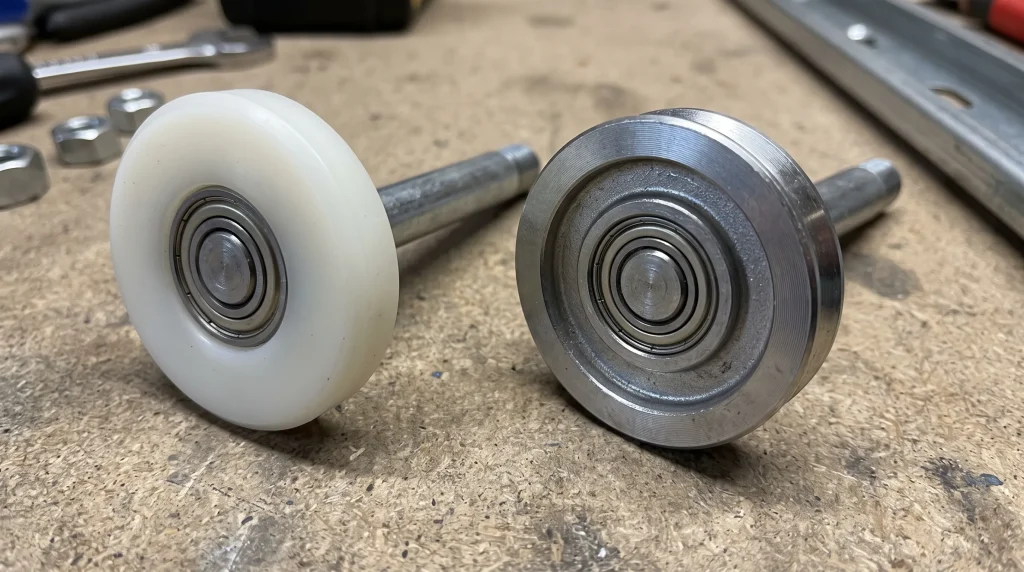
Nylon rollers have a visible plastic wheel, usually white or off-white. Steel rollers are all-metal with no visible plastic. If you're not sure, a quick photo sent to us is usually enough for our technicians to confirm.
Do commercial garage doors always use steel rollers?
Not always, but steel is more common on high-cycle commercial doors because of the heavier daily use. Some commercial applications now use heavy-duty nylon as well, depending on door weight and cycle count, and that call is usually made after inspecting how the specific door is used day to day.
What's the price difference between nylon and steel roller replacement?
Nylon rollers typically cost somewhat more per unit than steel, though the gap is modest, generally an affordable upgrade either way for a full set. We'll always give you exact pricing based on your specific door before any work starts.