

Replacing the bottom rollers on a garage door is a task many homeowners can safely handle themselves, since they carry no spring tension. The rollers near the top of the door are a different story: they sit close to the torsion spring system and lift cables, and working near that stored tension without the right tools or experience is where DIY roller jobs turn dangerous, and where a straightforward garage door roller repair can quickly turn into a costly trip to the emergency room instead.
Key Takeaways
- Bottom rollers are generally low-risk for a confident DIYer with basic tools.
- Rollers near the top of the door sit close to spring tension and cable, which raises the risk significantly.
- Using the wrong tool to compress or hold the door in place can cause it to drop unexpectedly.
- A misaligned replacement roller can throw the whole door off-track, not just one panel.
- Skipping the “call a pro” line here isn’t about ability; it’s about what’s stored right next to the roller you’re replacing, since a straightforward garage door roller replacement can turn into a serious injury risk once spring tension is involved.
DIY-Safe vs. Call-a-Pro: Quick Comparison
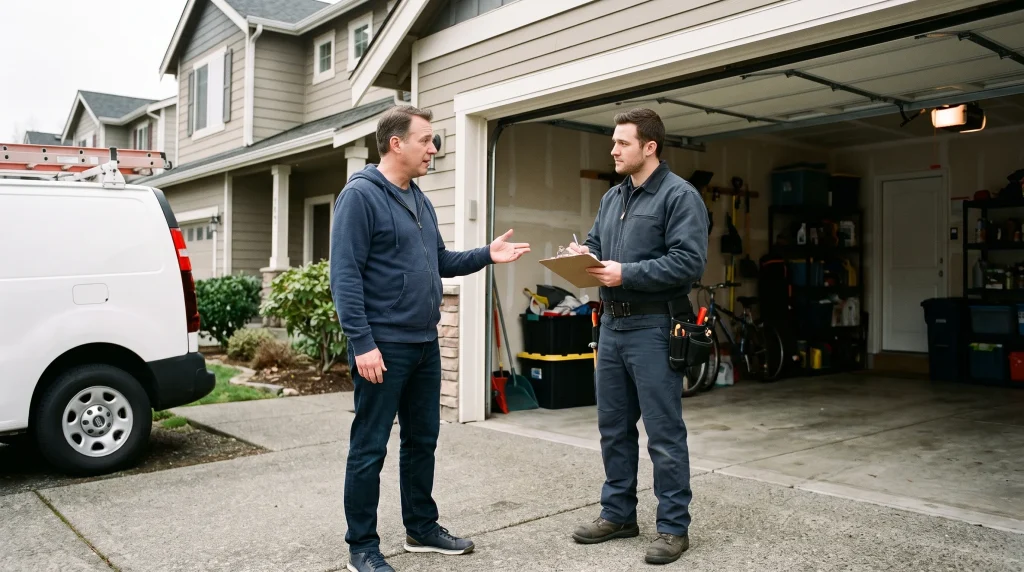
| Task | DIY-Safe | Call a Pro |
| Replacing a bottom roller | Yes, with basic tools | Not required |
| Replacing a top roller near the spring system | Only with proper door support | Recommended |
| Replacing more than 2 rollers on one side at once | No | Recommended |
| Any work involving the torsion spring | No | Required |
| Door fails a manual balance test | No | Required |
| Roller has already jumped the track | No | Recommended |
Working Near Spring Tension Without the Right Tools
The biggest risk in DIY roller replacement isn’t the roller itself; it’s what’s next to it. The top rollers sit close to the torsion spring and lift cables, both of which store enough tension to cause serious injury if the door shifts or drops while you’re working nearby.
- Never replace a roller while the door is only partially open and unsupported.
- Never attempt to adjust, loosen, or remove a torsion spring as part of a roller job; that’s a separate, higher-risk task entirely.
- Use locking pliers or a proper door prop on both sides of the track before working near the top section; never rely on the garage door opener arm to hold the door in place.
Why Top Roller Replacement Carries More Risk Than Bottom Rollers
If the roller you need to replace is one of the top two on either side, the safer move is calling a professional, not because the roller swap itself is difficult, but because of what’s stored in the spring system right next to it.
If you’re not sure whether your situation involves the top rollers, our guide on Why Are Garage Door Rollers So Noisy? 5 Causes and Fixes can help you pinpoint which roller is causing the problem before you decide whether it’s a DIY job.
Misjudging the Door’s Weight and Balance
A standard residential garage door weighs well over 100 pounds, and rollers are part of what keeps that weight distributed evenly across the track. Removing more than one roller at a time, or removing a roller without supporting the door section first, can cause a sudden shift in balance.
- Replace one roller at a time; never multiple rollers on the same side simultaneously.
- Support the door section you’re working on with a clamp or wood block before removing the hinge bolt.
- If the door feels heavy or off-balance before you even start, that can be a sign of a bigger issue, like a failing spring, rather than just a worn roller.
- Keep a second person nearby whenever you’re supporting a door section by hand, even briefly, so there’s help available if the door shifts unexpectedly.
Signs the Door’s Weight Distribution Is Already Off Before You Start
If the door doesn’t stay level when raised halfway and released, a standard manual balance test, stop and have that checked before touching any rollers. An unbalanced door under DIY repair is far more likely to bind, jump track, or drop mid-project unexpectedly.
Using the Wrong Roller Size or Type
Garage door rollers vary by stem length, wheel diameter, and material, and installing the wrong one can cause the door to bind, run unevenly, or pop out of the track within days. This is one of the more common mistakes that leads to follow-up calls after a DIY roller job.
- Measure the existing roller’s stem length and wheel diameter before ordering replacements.
- Match roller material, nylon versus steel, to the rest of the set unless you’re intentionally upgrading the whole door.
- Confirm the new roller is rated for your door’s weight; a lightweight roller under a heavy insulated door tends to wear out faster and can bind under load.
- Buy from a supplier that lists stem length and load rating clearly, rather than a generic listing with no specs, to avoid a return trip to the store.
How to Confirm a Replacement Roller Actually Fits
Bring the old roller with you when buying a replacement, or take clear measurements and a photo. Resources like Angi’s guide to inspecting and maintaining a garage door are a good starting point for understanding what a properly aligned, well-matched roller setup should look like before you buy parts.
If you’re weighing whether nylon or steel makes more sense for the replacement, our comparison on Nylon vs. Steel Garage Door Rollers: Which Lasts Longer? 6 Key Differences breaks down which material fits which situation.
Not Knowing When to Stop and Call a Professional
The honest answer to “can you do this yourself” depends on which roller, and how comfortable you are stopping the job the moment something feels off: a stuck bolt, a door that won’t stay propped, or tension you weren’t expecting.
- If at any point the door drops, shifts, or binds unexpectedly, stop and call a professional rather than trying to force it back into place.
- If the job involves anything beyond the bottom two rollers, weigh the modest cost of a professional visit against the injury risk of working near spring tension.
- Never attempt spring adjustment or replacement as a DIY add-on to a roller job. It’s a separate skill set with meaningfully higher risk, as outlined in The Spruce’s guide to replacing garage door springs.
- If you’re unsure whether a sound or resistance you’re feeling is roller-related or spring-related, treat it as spring-related until proven otherwise; the downside of being overly cautious is far smaller than the downside of guessing wrong.
A Simple Rule of Thumb for Deciding DIY vs. Professional
If the job only touches a bottom roller and the door passes a manual balance test, most confident DIYers can handle it safely. If either of those conditions isn’t true, it’s worth having a professional take a look before starting.
And if you’re not sure whether you’re even at the replacement stage yet, How Often Should You Replace Garage Door Rollers? 7 Signs It’s Time is the quickest way to check before you buy a single part.
Bottom Rollers Are Fair Game, the Rest Depends on What’s Nearby
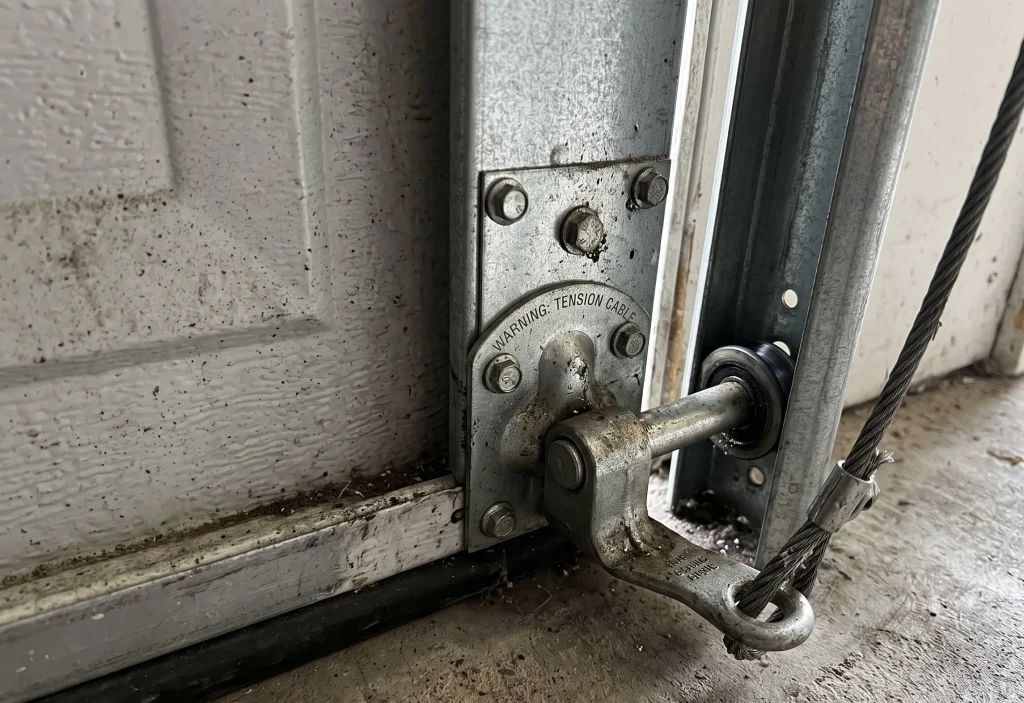
Bottom roller swaps are a reasonable DIY job for most homeowners with basic tools and a bit of patience. Once the job moves toward the top rollers, spring tension, or a door that’s already off-balance, the risk profile changes enough that it’s worth having a professional handle it instead.
R&S Erection of Vallejo offers inspections, so you’re never guessing which category your situation falls into. Contact us today or give us a call to talk through pricing and get a clear answer before you pick up a wrench.
Frequently Asked Questions
What tools do I actually need to replace a roller safely?
At minimum, locking pliers or a door clamp to secure the section you're working on, a socket wrench for the hinge bolts, and the correctly sized replacement roller. Skipping the clamp is one of the more common shortcuts that leads to a dropped door, so don't skip it even if the job seems quick.
How do I know if my roller is a top roller or a bottom roller?
Count from the ground up. The top two rollers on each side sit closest to the horizontal track curve and the spring system; that's the section we recommend leaving to a professional.
What happens if I install the wrong size roller?
The door can bind, run unevenly, or pop the roller out of the track within days. This is a common follow-up call after a DIY roller job, usually traced back to a mismatched stem length.
Can a bad DIY roller replacement damage my garage door opener?
Yes. A misaligned or wrong-sized roller forces the opener to work harder to move the door, which can strain the motor and drive system over time, not just the rollers themselves. This can sometimes show up months later as a separate, unrelated-seeming opener repair call.
How much does professional roller replacement typically cost?
It depends on how many rollers need replacing and whether it's paired with other maintenance, generally ranging from an affordable single-roller fix to a moderate cost for a full set. We always quote the exact price after a quick inspection.
Is it ever safe for a DIYer to touch the torsion spring while replacing rollers?
No. Torsion springs store enough tension to cause serious injury if released improperly. This is generally considered the single biggest reason to hand a job to a professional, even if the roller replacement itself would otherwise be simple.
How long does a professional roller replacement usually take?
For a standard set, replacement time can often range from about an hour to a few hours, depending on how many rollers need replacing and whether the track needs any adjustment at the same time. We can give you a more specific estimate after inspecting the door.
What's a manual balance test, and why does it matter before I start?
With the opener disconnected, raise the door about halfway and let go. A balanced door stays roughly in place; one that falls or shoots up can indicate a spring or cable issue that should be addressed before any roller work.
If I mess up a DIY roller job, can it still be fixed?
In almost every case, yes. Even a jumped track or a bound-up door from a DIY attempt is usually a straightforward fix for a technician, so it's rarely too late to call for help if something goes wrong mid-project.